Nitric oxide as a key regulator of extracellular matrix modulation during ovarian follicle development
Keywords:
Nitric oxide, Extracellular matrix, Folliculogenesis, Ovulation, Matrix metalloproteinasesAbstract
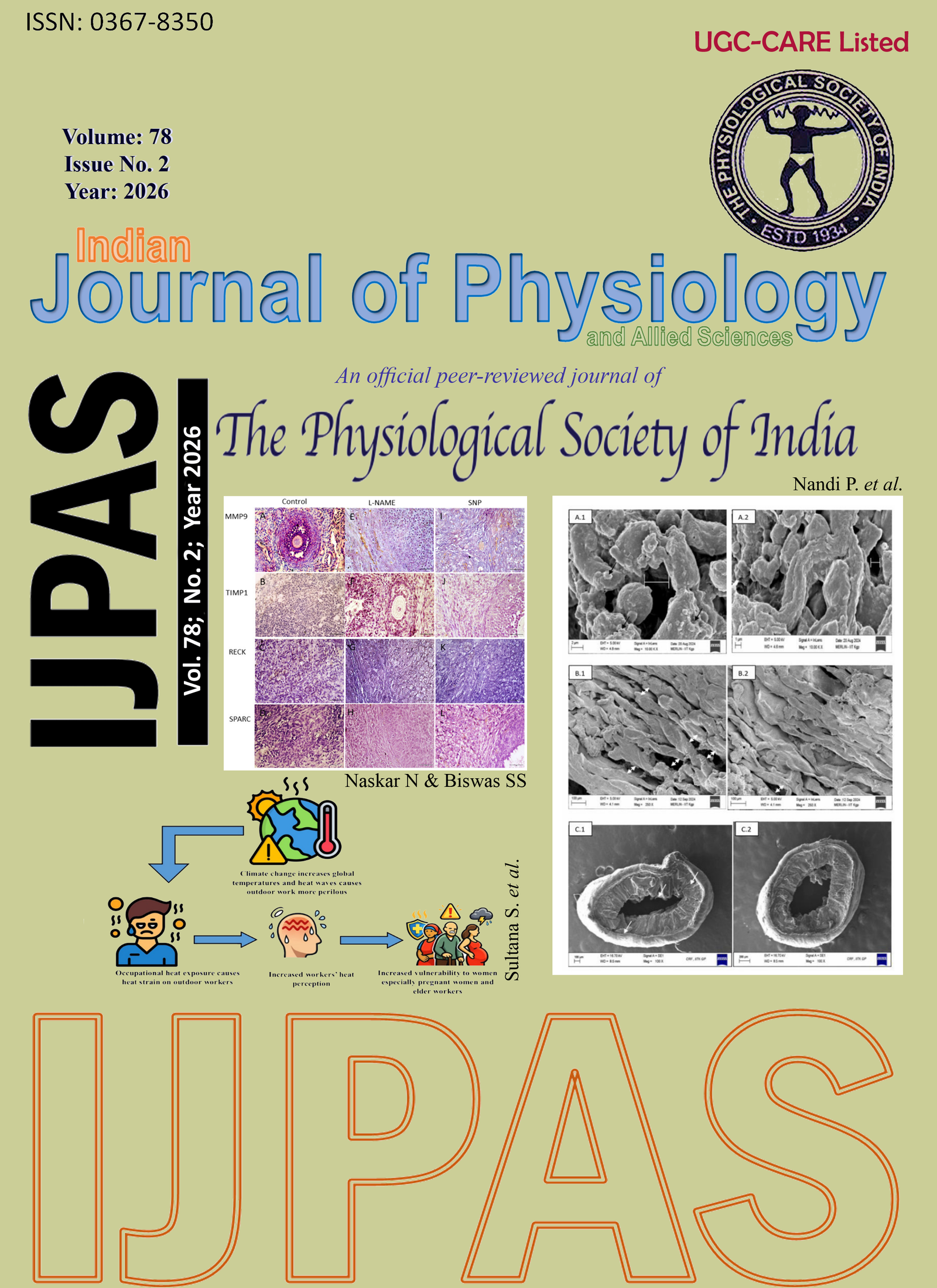
Background: Extracellular matrix (ECM) remodeling is essential for maintaining the structural and functional integrity of ovarian follicles. The turnover of ECM is controlled by matrix metalloproteinases (MMPs) and tissue inhibitors of metalloproteinases (TIMPs). Nitric oxide (NO), produced by follicular cells, contributes to follicular development and may influence ovarian ECM dynamics. The present study aims to determine the regulatory role of NO in the expression of ECM components during follicle development under an altered NO milieu. Methods: Adult female rats in the estrous phase were subjected to intrabursal injections of the nitric oxide synthase (NOS) inhibitor L-nitro-arginine methyl ester (L-NAME) or the NO donor sodium nitroprusside (SNP) to modulate in-vivo NO levels. Ovaries were collected at the subsequent estrous phase. Paraffin-embedded ovarian sections were stained with hematoxylin–eosin and Masson’s trichrome for histological and collagen analysis. ECM-related proteins, including MMP-9, TIMP-1, RECK, and SPARC, were analyzed using immunohistochemistry and Western blotting. Results: L-NAME–treated rats exhibited a significant reduction in the number of freshly formed corpora lutea and preovulatory follicles compared to the control group. Collagenase activity was reduced in L-NAME–treated ovaries, accompanied by increased collagen deposition, indicating impaired ECM remodeling. Furthermore, MMP-9 and SPARC expression levels were reduced, whereas TIMP-1 and RECK expression levels were elevated in NO-inhibited ovaries. Conclusion: These findings indicate that NO is an important regulator of ovarian ECM remodeling as it adjusts the proportion of MMPs to their inhibitors. NO signaling disruption changes the ECM dynamics, which may adversely affect folliculogenesis and luteal activity, influencing female reproductive health and fertility.
Downloads
Published
How to Cite
Issue
Section
License

This work is licensed under a Creative Commons Attribution-NonCommercial-NoDerivatives 4.0 International License.